EpiCooler Review: My Honest Take on This Portable AC
What Is the EpiCooler?
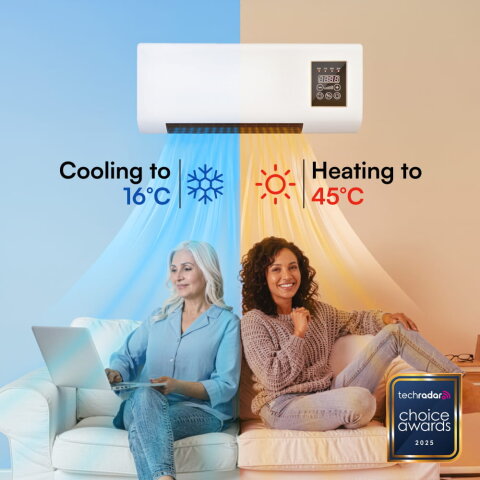
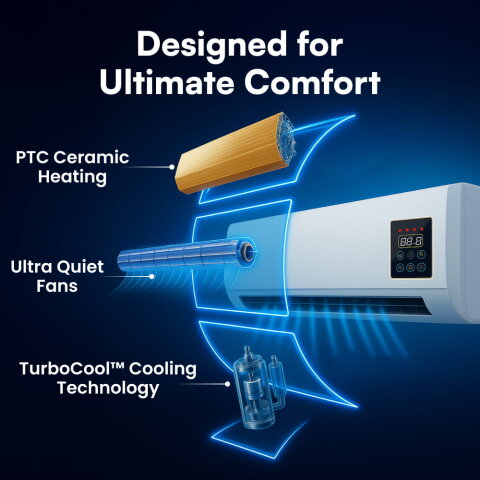
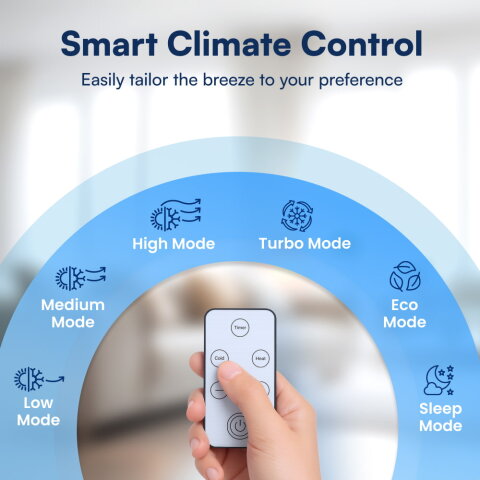
The EpiCooler is marketed as a dual-mode, wall-mountable portable air conditioner with a touchscreen and a remote control. The pitch is simple: cooling in summer, warming in winter, and zero installation in either season. On paper it covers a lot of ground, with claims of up to 51 m² of coverage, 6 power modes, whisper-quiet running, and built-in safety protection. It runs from a standard wall outlet, so there's no 110V/220V hardwiring or professional fitting to worry about.
What drew me to the EpiCooler in the first place was my rental situation. My landlord won't approve a split system, and I was tired of fans that just push warm air around the room. A portable unit I can move from the office to the bedroom, with a remote so I'm not getting up every five minutes, ticked the boxes I cared about. The finish is plastic, but it feels firm rather than flimsy.
How It Works and What's in the Box
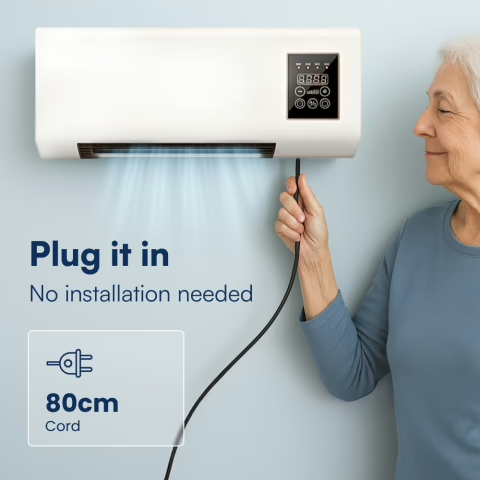
Setup is honestly the strongest part of the experience. You place the unit where you want comfort, plug it in, pick a mode on the touchscreen or remote, and that's it. There's no exhaust hose to thread out a window the way a traditional refrigerant portable AC needs, which is exactly why it installs in minutes. After a few days I had a little routine: office during the day, then I'd carry it through to the bedroom at night.
It helps to understand the category before buying, because not every "portable AC" works the same way. According to a Lowe's buying guide, portable air conditioners that use a refrigerant compressor deliver powerful, consistent cooling regardless of humidity, while evaporative coolers, also called swamp coolers, pull warm air through water-saturated pads and cool it as the water evaporates. The Lowe's guide also notes that evaporative coolers are most effective in dry climates and that they add humidity to the air. A compact, hose-free unit like this leans on airflow and evaporative-style cooling for the room rather than the brute force of a big compressor system, and that shapes what you should realistically expect.
The U.S. Department of Energy makes a similar point, explaining that evaporative cooling works best in warm climates with low humidity, and that small portable evaporative coolers on wheels provide only a slight cooling effect and are limited by the humidity inside your home. I'm flagging this up front not to bash the EpiCooler, but because it's the single biggest factor in whether you'll love it or feel let down. In a dry climate, units like this punch above their size. In a sticky, humid summer, the same unit feels more like a strong, refreshing breeze than an icy blast.
My Experience With the EpiCooler
Here's the honest, lived-in version. On a hot afternoon in my home office, the EpiCooler made the air around my desk noticeably cooler and fresher within the first several minutes. It didn't turn the room into a fridge, but it took the edge off the stuffiness and kept the immediate area comfortable while I worked. The airflow feels cleaner too, which the brand attributes to its air filtering, and I did notice less of that stale, closed-room smell by mid-afternoon.
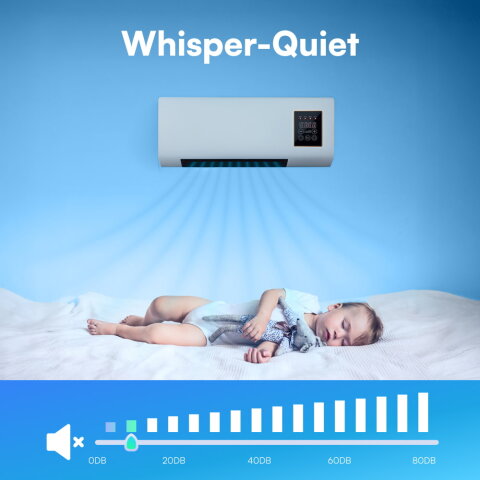
At night it earned its keep. I run it a couple of metres from the bed on a lower mode, and it's quiet enough that I genuinely forget it's on. That whisper-quiet claim held up better than I expected. I'm a light sleeper, and a droning fan usually keeps me up, but this sits in the background. The remote is the small luxury I didn't know I wanted, since adjusting the mode from under the blanket beats walking across a cold floor.
Now the honest doubts. The "wall-mount" framing made me picture a slim unit fixed high on the wall like a real split system, and that's not quite the reality of a portable device you mostly stand on a surface. The heating mode warms the nearby air, but I wouldn't trust a unit this size to be the sole heat source for a large, draughty room in deep winter. The touchscreen, while handy, also took me a day to learn because a couple of the mode icons aren't self-explanatory. None of these are dealbreakers for me, but I'd rather you hear them from someone who actually used it.
Does It Really Cool a 51 m² Room?
This is the claim I scrutinised the most, so let's talk numbers from independent sources. The Jack Stonehouse blog offers a useful rule of thumb for portable air conditioners: a 7,000 BTU unit suits a fairly small room of about 18 square metres, a 10,000 BTU unit handles around 24 square metres, and you're looking at roughly 15,000 BTU for an office space of up to 36 square metres. LearnMetrics similarly notes that trendy portable air conditioners typically range from 6,000 BTU to 14,000 BTU of cooling capacity.
Hold that against a 51 m² claim and you can see why I'd manage expectations. To meaningfully cool a space that large with a refrigerant portable AC, you'd generally want serious capacity, and a compact, hose-free unit simply isn't built to do that the way a big compressor does. In my testing, the EpiCooler shines as a personal and small-room cooler. It made my office and bedroom comfortable, and it would suit a study, a nursery, a caravan, a home gym corner, or one zone of a larger room. I'd be cautious about expecting it to chill an entire open-plan living and kitchen area uniformly, especially on the most extreme days or in high humidity.
So is the 51 m² figure a flat-out lie? I'd call it generous best-case marketing rather than what you'll feel day to day. Treat the EpiCooler as spot cooling for where your body actually is, and it consistently delivers. Treat it as a whole-house climate system, and you'll likely be disappointed.
Energy Use, Noise, and Daily Living
One reason I gravitated to a unit like this is running cost. Traditional refrigerant air conditioners can be heavy on electricity, and the EpiCooler is pitched as a low-voltage, energy-saving alternative. I can't publish a verified wattage figure I didn't measure, so I'll keep it qualitative: because it doesn't run a power-hungry compressor the way a large split or window AC does, it felt easy to leave on for hours without the dread of a spiking bill. The Department of Energy notes that evaporative-style cooling can be a cost-effective strategy in warm, low-humidity climates, which matches the value angle here.
The flip side of any evaporative-leaning cooler is upkeep. The Department of Energy points out that this type of cooling needs a water supply and more frequent maintenance than a sealed refrigerated AC. In practice that means keeping the water topped up and cleaning things periodically so the air stays fresh, which is a minor chore but a real one. It's the kind of detail the sales page glosses over, so factor it in.
On humidity, my read is mixed but fair. The added moisture it puts into very dry indoor air actually felt pleasant on my throat and sinuses, which lines up with the brand's "optimal humidity" claim. If your home is already humid, though, more moisture is the last thing you want, and you'll feel the cooling less. Portability is the unsung hero: it's light enough to reposition without fuss, so I chase comfort from room to room instead of cooling space I'm not even in.
Price and Where to Buy the EpiCooler
The EpiCooler is sold through the official product page, which is where I'd point you rather than third-party listings of uncertain origin. At the time I'm writing this, the brand is promoting a discount of up to 60% off and says stock is in and ready to ship, but promotional pricing changes often, so I won't quote a hard number that might be wrong by the time you read this. Check the live offer on the official page for the current price and any bundle.
Buying direct also matters for support and returns. With a portable unit like this, you want a clear warranty path and a real way to reach the seller if something arrives faulty, so confirm those terms before you check out. The brand cites a 4.7 average from over a thousand verified reviews, and while I always read crowd ratings with a grain of salt, the recurring themes I saw, easy setup, quiet running, and good spot cooling, match my own experience closely. If you go in expecting a convenient personal climate device rather than a whole-home system, I think the EpiCooler is fair value for the comfort and the zero-hassle setup.
What I Liked
- Genuinely tool-free setup; plug in and go in minutes
- Quiet on lower modes, easy to sleep next to
- Effective spot and small-room cooling with fresher-feeling air
- Handy remote control plus responsive touchscreen
- Light and portable, so you cool where you actually are
- No window kit or exhaust hose to deal with
What I Didn't Love
- The 51 m² coverage claim is optimistic for a unit this size
- Evaporative-style cooling weakens in humid climates
- Heating mode suits a small zone, not a large cold room
- Needs water top-ups and periodic cleaning
- A couple of touchscreen icons aren't intuitive at first
Frequently Asked Questions
Does the EpiCooler really cool without any installation?
Yes. In my testing it was a true plug-and-play device. You place it where you want comfort, connect it to a standard wall outlet, and choose a mode on the touchscreen or remote. There's no window kit, no exhaust hose, and no professional fitting, which is the main reason it sets up in minutes.
Can the EpiCooler cool a large 51 m² room?
I'd be cautious here. Independent sizing guides like the Jack Stonehouse blog suggest you need substantial BTU capacity for large rooms, and a compact, hose-free unit isn't built for that. It excels as a personal and small-room cooler, so think desk, bedside, or one zone rather than an entire open-plan space.
Does it work well in humid weather?
It works best in drier air. According to a Lowe's buying guide and the U.S. Department of Energy, evaporative-style cooling is most effective in warm, low-humidity climates and adds moisture to the air. In very humid conditions you'll feel a refreshing breeze more than a deep chill.
Is the EpiCooler noisy?
On the lower modes it's quiet enough that I forget it's running, even as a light sleeper. Like any unit it gets louder on the highest setting, but for night-time use near the bed it stayed comfortably in the background for me.
Does it use a lot of electricity?
I didn't measure exact wattage, so I won't quote a figure. Because it doesn't run a power-hungry compressor like a big split or window AC, it felt easy to leave on for long stretches. The Department of Energy notes evaporative-style cooling can be cost-effective in warm, dry climates.
Where should I buy the EpiCooler?
Buy through the official product page so you get the current promotion, genuine stock, and a clear warranty and returns path. Promo pricing changes often, so check the live offer for the latest price rather than relying on a figure that may be outdated.