Katori Titanium Cutting Board Review: Is It Actually Worth It?
Key Facts
- Made from 100% pure titanium with a non-porous surface, per the manufacturer's product information.
- Marketed as antibacterial, BPA-free and non-toxic, with no oiling or deep cleaning required.
- Double-sided design intended to keep raw and cooked foods separate and reduce cross-contamination.
- Backed by a 30-day money-back guarantee, according to the official store.
- Official listing shows a 4.7 average from 1,000+ verified reviews and 8,000+ customers.
- Best for hygiene-focused cooks who want a lifetime board; less ideal if you dislike a firm metal cutting feel.

What the Katori Titanium Cutting Board Is
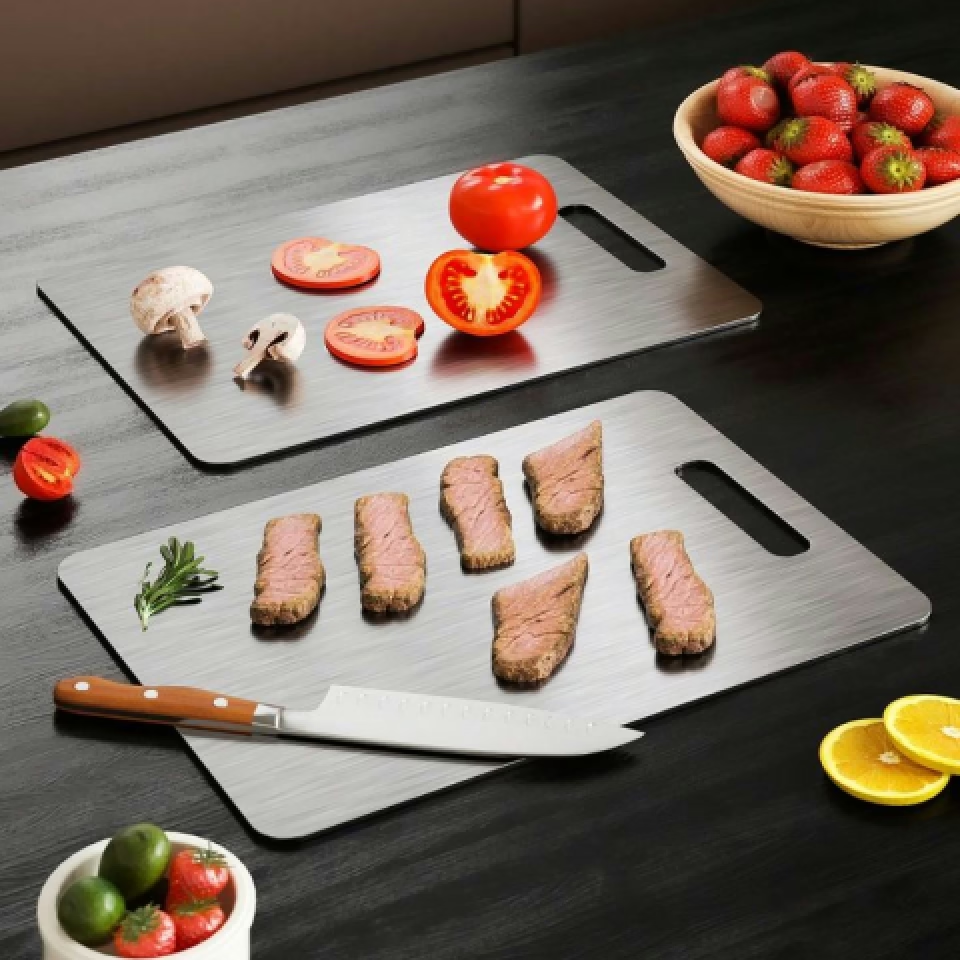
The Katori Titanium Cutting Board is a kitchen cutting board made from solid titanium instead of the usual plastic, wood or bamboo. According to the manufacturer's product information, it's built from 100% pure titanium with a non-porous, laser-cut surface, and it's designed to be antibacterial, BPA-free and non-toxic. The core promise is simple: a surface that food, bacteria and stains can't soak into, so cleanup is a quick rinse rather than scrubbing, oiling or worrying about hidden grime.
A few design details stand out. The board is double-sided, which the maker positions as a way to keep raw proteins on one face and cooked or ready-to-eat foods on the other, cutting down on cross-contamination. It's described as heat-resistant and lightweight enough to move around or take outdoors, and the company frames it as scratch- and warp-resistant with what it calls lifetime durability. In short, it's aiming to be the last cutting board you buy, positioned squarely against boards that wear out, absorb odors or eventually get tossed.
How Titanium Compares to Wood, Plastic and Glass
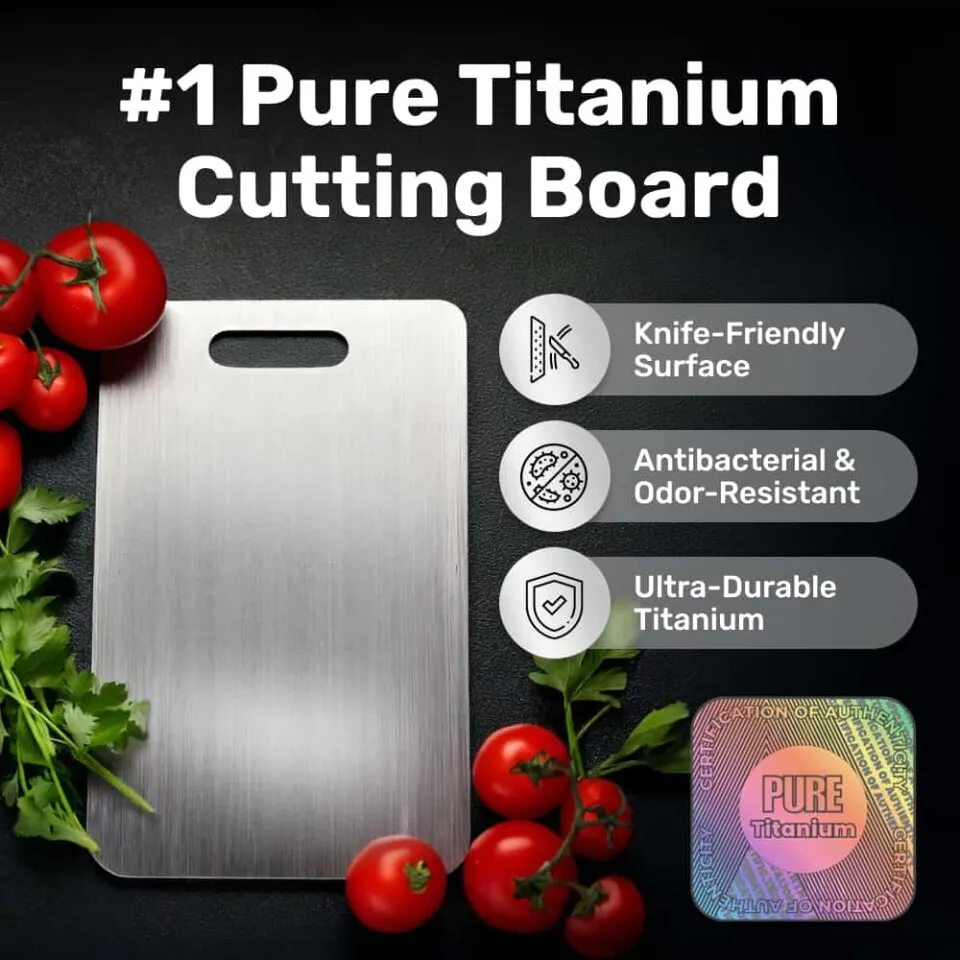
Here's the direct answer: titanium's main advantage is that it's non-porous, and that's the honest reason this category exists. Plastic boards develop knife grooves that hold bacteria and can shed tiny plastic particles into food over time; wood and bamboo look great but need oiling, can crack, and can absorb juices and odors if you're not careful. The manufacturer leans on exactly this contrast, describing titanium as a surface where bacteria "can't get trapped inside" because there's nowhere porous for it to hide.
The trickiest comparison is glass. Glass boards are also non-porous and easy to sanitize, but they're notorious for dulling knives fast because the surface is unforgiving. This is where Katori tries to differentiate: the company says its surface is knife-friendlier than glass, aimed at preserving blade sharpness rather than grinding it down. That's an important nuance to keep in mind as manufacturer positioning rather than an independent lab result. Titanium is still a hard metal, so it's realistic to expect it to be firmer than end-grain wood, just not the blade-killer that glass tends to be.
The practical takeaway: if your priority is hygiene and zero upkeep, titanium checks boxes that wood and plastic can't. If your priority is the softest possible feel for premium Japanese knives, a good wood board still has a case. Katori is trying to give you the hygiene of glass without the knife penalty, and that's a reasonable middle ground for most home cooks.
What It's Like to Use Day to Day
The real-world appeal shows up in the small daily moments, not the spec sheet. Based on the manufacturer's description and published customer feedback, the biggest change people notice is cleanup: instead of scrubbing grooves or hand-drying wood, you rinse the board and you're done. There's no oil-conditioning ritual, no waiting for it to dry before storing, and, according to the maker, no lingering garlic-and-onion smell soaking into the surface. For anyone who cooks daily, that's the kind of quiet convenience that actually changes habits.
The double-sided layout is more useful than it sounds. Prepping chicken on one side and slicing salad ingredients on the other, without swapping boards mid-cook, is a genuine time-saver and a sensible hygiene move. Customers also point to the heat resistance and light weight as reasons it earns a permanent spot on the counter rather than getting buried in a cabinet, and some mention using it as a serving surface because it looks modern rather than utilitarian.
It's fair to set expectations, too. A titanium board is firmer than wood, so cutting has a different, more solid feel and a slightly sharper sound. The firm, no-give surface feels different from a thick butcher block, so expect a short adjustment if you love that soft cutting 'thunk'. That's a preference gap, not a defect.
Is Katori Legit? Complaints and Does It Really Work
Short answer: the product itself is a real, functional titanium board, and the material science behind the hygiene claim is sound; the fair skepticism is mostly about marketing tone, not whether it works. Titanium being non-porous and easy to sanitize isn't hype, it's the whole reason metal and glass surfaces are used in professional food environments. Where you should read carefully is around absolute language: the manufacturer's antibacterial and "lifetime" framing is a product claim, so treat it as the maker's positioning rather than a medical or laboratory guarantee.
On trust signals, the official listing shows a 4.7 average from more than 1,000 verified reviews and 8,000+ customers, which is a strong social proof profile for this kind of product. The most common hesitations we'd expect from shoppers are predictable: doubts that a metal board is worth the premium, worry about knife wear, and the usual caution around a steep advertised discount. The knife concern is the one to weigh most honestly; titanium is harder than wood, so pair it with normal sharpening habits and set expectations that it sits between wood and glass on the blade-friendliness scale.
The single best safeguard against buyer's remorse is the policy, not the promise. The company backs the board with a 30-day money-back guarantee, which means you can put it through your real kitchen routine, test the cleanup, the feel and the knife experience yourself, and return it if it doesn't fit how you cook. That risk-reversal is what turns a "sounds good" product into a low-stakes trial.
Price and the Official Offer
Straight answer on price: the official store is currently running a large promotional discount rather than publishing a single fixed everyday number, so the smartest move is to confirm the live price directly on the official offer page before you buy. What's consistent is the offer structure: a heavily promoted discount, the 30-day money-back guarantee, and in-stock, ready-to-ship availability, according to the official store. Because the price moves with the promotion, quoting a stale figure here would only mislead you.
On value, think of it as a one-time purchase against a recurring one. Plastic and wood boards get replaced as they groove, stain, warp or wear out; the entire pitch of a titanium board is that you buy it once and stop rebuying. If the promotional pricing holds and the board lasts anywhere near as long as the maker claims, the cost-per-year math becomes very favorable compared with replacing cheaper boards every year or two. If you want it, the guarantee makes now a sensible time to try it while the discount and stock are live, and the only place to buy it is the official offer.
What We Liked
- Non-porous titanium surface that, per the manufacturer, resists bacteria, stains and odors.
- Effortless upkeep: a quick rinse, with no oiling or deep cleaning required.
- Double-sided design that makes separating raw and cooked foods easy.
- Positioned as knife-friendlier than glass, so it aims to protect blade sharpness.
- Backed by a 30-day money-back guarantee that makes trying it low-risk.
- Marketed as lifetime-durable, so it's meant to replace repeat board purchases.
Worth Considering
- Titanium feels firmer than wood, so expect a short adjustment to the stable, no-give surface.
- Antibacterial and lifetime claims come from the manufacturer, so treat them as product positioning, not lab-verified guarantees.
- It's a premium buy, but as a one-time purchase it offsets the cost of replacing cheaper boards.
- Not for you if you specifically want the soft "give" of a thick butcher block for delicate knives.
Frequently Asked Questions
Is the Katori Titanium Cutting Board worth it?
For most hygiene-focused home cooks, yes. It replaces boards that stain, smell or wear out, cleans with a simple rinse, and is backed by a 30-day money-back guarantee so you can test it risk-free. It's less ideal only if you specifically want the soft cutting feel of thick wood.
Is Katori legit, and does it really work?
The product is a real titanium board, and the hygiene logic is sound because titanium is non-porous and easy to sanitize. The official listing shows a 4.7 rating from 1,000+ verified reviews. Treat the "antibacterial" and "lifetime" wording as manufacturer claims, and use the guarantee to verify it in your own kitchen.
Will a titanium board dull my knives?
Titanium is harder than wood, so it's firmer, but the manufacturer positions it as knife-friendlier than glass, which is the surface most notorious for dulling blades. Realistically it sits between wood and glass; pairing it with normal sharpening habits keeps your knives in good shape.
How do you clean and maintain it?
According to the manufacturer, cleanup is just a quick wash with water, no oiling, seasoning or deep cleaning needed. Because the surface is non-porous, food and odors don't soak in, which is the main day-to-day advantage over wood and plastic.
How much does it cost and where can I buy it?
The official store runs a large promotional discount rather than a fixed public price, so check the current price on the official offer page. It's sold through the official offer with a 30-day money-back guarantee and in-stock, ready-to-ship availability.
Is it safe and non-toxic for food prep?
The manufacturer describes it as BPA-free, non-toxic and free from harmful chemicals, with a non-porous surface designed to prevent bacteria buildup and avoid the microplastic shedding associated with worn plastic boards. As always, follow normal food-safety practices like separating raw and cooked foods.