Herz P1 Review 2026: Does This Whole-Body Vibration Plate Actually Work?
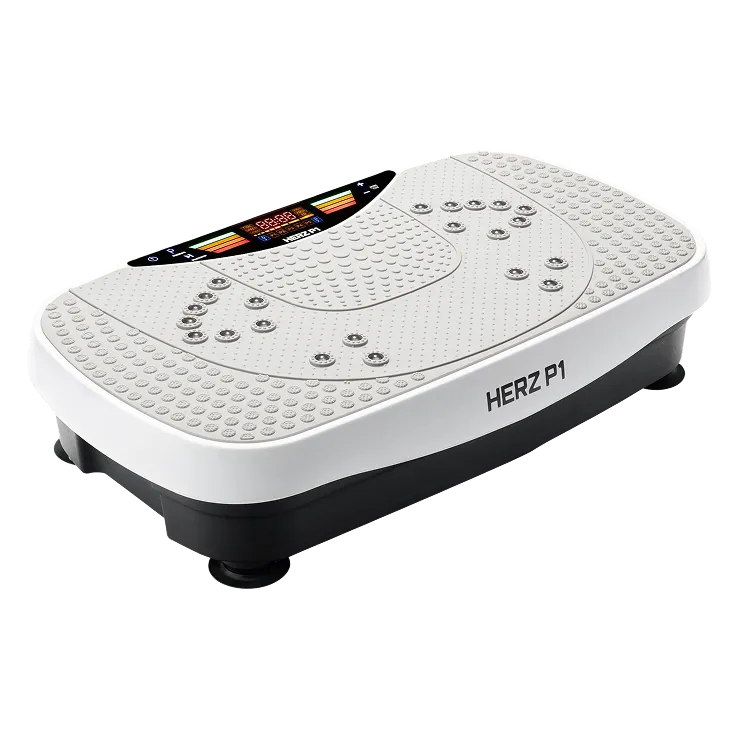
Key Facts at a Glance
- What it is: a whole-body vibration (WBV) plate you stand, sit, or lean on for short daily sessions.
- Session length: the manufacturer positions it around 10 minutes a day.
- Controls: 5 preset programs (P1 to P5) plus manual speed from 1 to 99.
- Design focus: low-impact and marketed as gentle on knees, hips, and back.
- Extras: built-in speaker; remote and resistance bands are sold separately.
- Risk reducer: 90-day money-back guarantee, per the official offer.
What the Herz P1 Is and How It Works
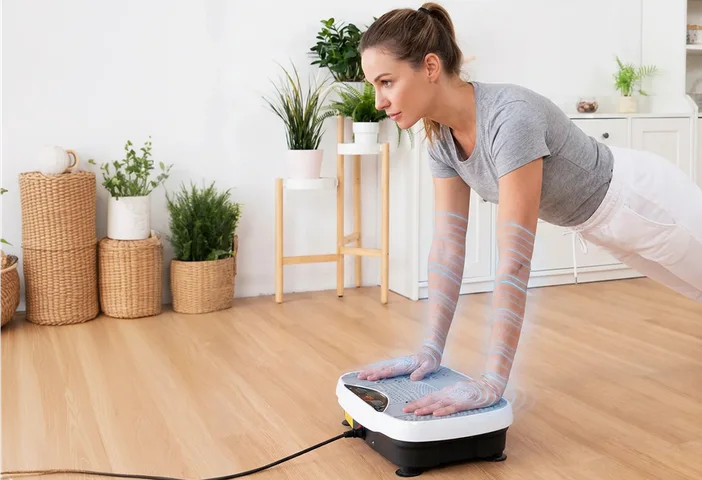
The Herz P1 is a whole-body vibration plate, a category of home fitness device you step onto rather than climb into. According to the manufacturer's official product information, you stand on the plate and thousands of small vibrations per minute prompt your muscles to contract and relax repeatedly. The pitch is that the machine does the "hard part," so there's no jumping, no straining, and no gym commute involved.
Mechanically, whole-body vibration is a well-established concept: rapid oscillations create instability, and your muscles fire reflexively to keep you balanced. That's the mechanism vibration plates are built around. It's worth being precise here, though, because it matters for setting expectations: the vibration drives muscle activation, but that is not the same thing as a guaranteed fat-loss or body-transformation result. Treat the plate as a tool that adds gentle movement and muscle engagement, not as a shortcut that melts weight on its own.
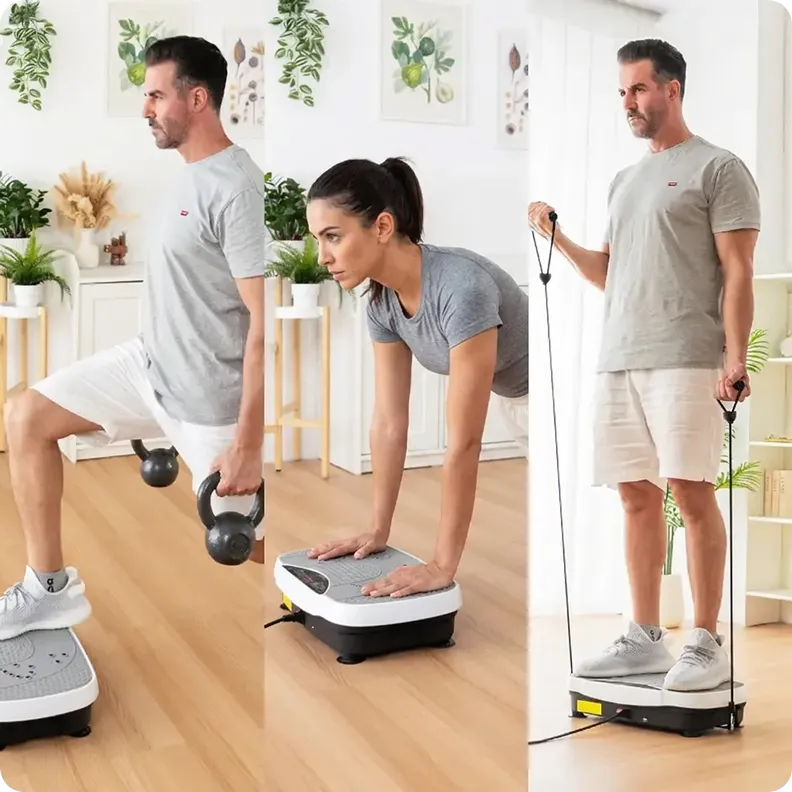
On the hardware side, the manufacturer lists 5 guided programs (labeled P1 through P5) and 99 speed levels you can set manually, which gives you room to start slow and build up. There's a built-in speaker so you can play music during a session, and the platform is designed for more than just standing: the official information describes using it for legs and glutes, core and balance work in a squat or single-foot stance, upper-body engagement by resting your hands on the pad, seated sessions, a shiatsu-and-magnet foot massage, and a slow low-speed recovery mode. One note for budget planning, straight from the company: the remote and resistance bands are sold separately.
What Using It Actually Looks Like Day to Day
The strongest thing the Herz P1 has going for it isn't a spec, it's the friction it removes. The manufacturer frames the whole routine as three steps that take about ten seconds to start: step on with bare feet or trainers at roughly shoulder-width, pick a program (tap P1 to P5 or dial in a speed from 1 to 99), and let the plate handle the next ten minutes while you stand, squat, or sit.
That low barrier is the real selling point, and it's honest to say why it matters. The company's own marketing leans into a familiar story: the treadmill becomes a clothes rack, the exercise bike collects dust, and the membership quietly renews for a place you visit twice. Most home fitness fails not because of willpower but because it asks for an hour, a change of clothes, and a drive you don't always have in you. A device that asks for ten minutes and a patch of floor is far easier to actually repeat, and consistency is where any fitness tool earns its keep.
Realistically, what changes in your routine is small but repeatable. Instead of "working out," you're stepping on for a few minutes while your coffee brews or a show plays through the speaker. The manufacturer positions the P1 as low-impact and gentle on knees, hips, and back, which is what makes those short, frequent sessions plausible for people who find traditional exercise uncomfortable. We haven't independently tested the unit, so we're describing how it's designed to fit a day rather than claiming a specific physical result, but the design intent is clear: make the movement so easy that skipping it feels like more effort than doing it.
Does It Really Work, and Is It Legit?
Short answer: whole-body vibration is a real training method, and the Herz P1 is a real product with a stated guarantee, so "scam" is the wrong frame. The fair question isn't whether it's legit but what it can and can't do. Here's the honest split.
What it can do: get you moving daily with almost no friction, engage muscles across your body through vibration, and offer a gentle, low-impact option for people who can't or won't do high-impact exercise. The manufacturer cites strong internal numbers, including a 4.9/5 rating based on 82,100+ verified customer reviews and a claim that 97% of users would recommend it. Those are the company's own figures, not independent lab results, so read them as popularity and satisfaction signals rather than proof of a specific outcome.
What it can't do: replace a full strength-and-cardio program or guarantee weight loss. This is the most common complaint pattern with any vibration plate, and it's usually a mismatch of expectations. If someone buys it expecting to step on for ten minutes and drop clothing sizes without changing anything else, they'll likely be disappointed. If they use it as an easy daily habit alongside sensible eating and normal activity, it's far more likely to feel worthwhile. The technology is legitimate; the marketing, like most in this space, sells the best-case version. Judge it as a convenient movement tool and it holds up. Judge it as a miracle machine and no vibration plate on the market would pass.
Who It's For (and Who Should Skip It)
The Herz P1 makes the most sense for a specific person: someone who wants low-effort, low-impact daily movement at home and has a history of abandoning bulkier equipment. If you're older, dealing with cranky joints, short on time, or simply allergic to the gym, the "just step on" format is designed for you. The seated and recovery modes, plus the foot-massage function the manufacturer describes, add value for gentle, everyday use rather than intense training.
It's a weaker fit for serious athletes or anyone chasing significant strength or hypertrophy gains, who will outgrow it quickly and need progressive resistance a plate can't fully provide. It's also not ideal if you want a complete package out of the box, since the remote and resistance bands cost extra. And if you have a medical condition, are pregnant, or have implants or circulation concerns, vibration training isn't automatically appropriate, so checking with a healthcare professional first is the responsible move. None of that makes it a bad product; it just means the P1 is built for consistency and comfort, not for maxing out.
Price, the Launch Offer, and the Guarantee
Here's the direct answer on cost: the official page presents the Herz P1 through a launch promotion advertised as up to 50% off rather than a fixed sticker price, so the exact figure you pay is confirmed at checkout on the official offer. Because the page doesn't publish a single locked-in number and we won't guess one, the sensible step is to check the current price directly on the official offer before deciding, especially since promotional pricing changes.
What does anchor the value is the comparison the manufacturer draws to ongoing gym spending and the reality that many home machines are paid for and then ignored. A one-time device you actually use can be easier to justify than a membership that renews for a place you avoid. Two things genuinely lower the risk of buying: the company states a 90-day money-back guarantee, which gives you real time to see whether the habit sticks, and the ten-minute format means the "will I use it?" question gets answered fast. If you're on the fence, that guarantee window is the reason to try it rather than wonder, and the official offer is the only place to buy it and claim the current launch discount.
Pros
- Extremely low friction to use: step on and go in about ten seconds, which is exactly what makes a daily habit realistic.
- Low-impact and marketed as gentle on knees, hips, and back, so it suits people who struggle with traditional exercise.
- Flexible controls with 5 programs and 99 speed levels, plus seated, recovery, and foot-massage uses.
- Built-in speaker and a compact "just a plate" footprint that's easier to keep out than bulky machines.
- 90-day money-back guarantee lowers the risk of trying it.
Cons
- It won't replace a full strength-and-cardio program, so treat it as a supplement, not your only training.
- The remote and resistance bands cost extra, but the core plate still works without them for basic sessions.
- The manufacturer's ratings are self-reported, so weigh them as satisfaction signals rather than independent proof.
- The page sells via a limited-time discount instead of a fixed price, so confirm the current cost on the official offer before buying.
Frequently Asked Questions
Does the Herz P1 vibration plate actually work?
It works as designed: whole-body vibration prompts your muscles to contract repeatedly while you stand, sit, or hold a position. That's a legitimate, established mechanism. What it won't do on its own is guarantee weight loss or replace a full workout program. Used as an easy daily movement habit alongside normal activity and sensible eating, it's far more likely to feel worthwhile than if you expect dramatic results from ten minutes alone.
Is the Herz P1 worth it?
For the right person, yes. If you want low-impact, low-effort daily movement and you've abandoned bulkier equipment before, the "just step on" format is built for exactly that, and the 90-day money-back guarantee lets you test whether the habit sticks. It's less worth it if you're an athlete chasing serious strength gains or you expect it to do the work of a full gym.
Is the Herz P1 legit or a scam?
It's a legitimate product in a real product category. Whole-body vibration training has been around for years, and the manufacturer backs the P1 with a stated 90-day money-back guarantee. The main caution isn't legitimacy, it's expectations: the marketing sells the best-case version, so judge it as a convenient movement tool rather than a miracle machine.
Is it safe for bad knees, hips, or a sore back?
The manufacturer positions the P1 as low-impact and gentle on knees, hips, and back, which is a big part of its appeal for people who find high-impact exercise painful. That said, vibration training isn't automatically right for everyone. If you have a medical condition, are pregnant, or have implants or circulation concerns, check with a healthcare professional before starting.
How do you use the Herz P1?
The manufacturer describes three steps: step on with bare feet or trainers at about shoulder-width, pick a program (P1 through P5 or a manual speed from 1 to 99), and let the plate run for roughly ten minutes while you stand, squat, or sit. You can also use seated, recovery, and foot-massage modes depending on the day.
What does the Herz P1 cost and is there a guarantee?
The official page sells it through a launch promotion advertised as up to 50% off rather than a fixed published price, so the exact amount is confirmed at checkout on the official offer. The company also states a 90-day money-back guarantee, which gives you time to decide whether it fits your routine. Note that the remote and resistance bands are sold separately.